

Tissue-resident macrophages and recruited monocytes are critical defenders against invasive pathogens.1
Macrophage polarization during infection:
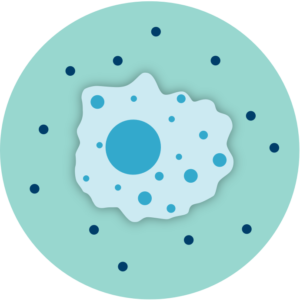
Initial activation
In the early stages of infection, macrophage activation occurs upon detection of a microbe expressing one or more danger signals, termed pathogen-associated molecular patterns (PAMPs).2
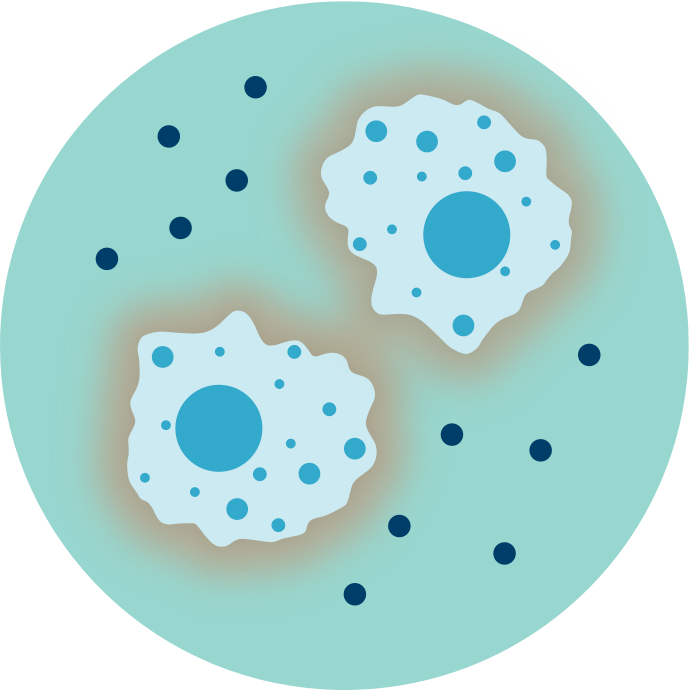
Inflammatory immune response
This induces macrophages to undergo profound physiological changes, releasing a variety of pro-inflammatory mediators to activate host immunity and promote pathogen killing.3,4

Resolution of inflammation
Once the infection is controlled, macrophages polarize toward an anti-inflammatory phenotype to modulate inflammation and repair tissue damage.4,5
However, macrophage polarization occurs along a dynamic continuum and can vary depending on the causative agent of infection and local environment2,3
Many pathogens have developed mechanisms to modulate macrophage function and evade immune detection1-3
These techniques induce macrophages to dampen inflammation, decrease antimicrobial activity, and inhibit phagocytosis. This creates a favorable environment for pathogen persistence and proliferation.1-3
As such, it is increasingly recognized that immunologic response is a key determinant of outcomes in infection. This may help explain the persistence of high mortality rates from infection despite major advances in antimicrobial agents.6,7
Strategies that reshape macrophage activity and synergize with antimicrobial agents represent a promising new approach to infectious disease1,6,7
Interventions that target macrophage polarization rather than the pathogen itself have shown promise as a new therapeutic strategy in infection.1-3
One approach to enhance macrophage activity is by administering cytokines that can have anti- or pro-inflammatory effects. The cytokine granulocyte-macrophage colony-stimulating factor (GM-CSF) is a promising candidate because of its ability to stimulate the growth and survival of multiple immune cell types, including mature tissue macrophages and monocyte progenitors.4
Administration of exogeneous GM-CSF not only increases the number of macrophages, but also augments their antimicrobial activity.5
Numerous preclinical studies have confirmed the beneficial effects of GM-CSF administration on macrophage function, including4,5:
- Boosted chemotactic, anti-fungal, and anti-parasitic activity
- Increased phagocytosis of microbes
- Reversal of corticosteroid-induced immunosuppression
- Enhanced antigen-presenting capacity
GM-CSF has been shown to enhance macrophage microbicidal activity in vitro and protect against lethal infection in vivo against5:
- Candida albicans
- Aspergillus fumigatus
- Staphylococcus aureus
- Mycobacterium avium complex
Based on these preclinical results, GM-CSF is under investigation as a novel therapeutic approach for difficult-to-treat infections in various patient populations6
GM-CSF has been shown to be safe and efficacious in preventing or reducing infectious outcomes in the context of cancer, HIV/AIDS, and critical illness.1-3
GM-CSF therapy significantly reduced infection in patients undergoing induction chemotherapy for AML in a phase 3, multicenter, double-blind, prospective study by the Eastern Cooperative Oncology Group (ECOG) (N=99)3,4
| GM-CSF (n=52) |
Placebo (n=47) |
P value | |
|---|---|---|---|
| Grade ≥3 infection | 51.9% (n=27/52) |
74.5% (n=35/47) |
0.024 |
| Fatal infection | 5.8% (n=3/52) |
23.4%
(n=11/47) |
0.019 |
| Pneumonia-related death in patients with pneumonia | 14.3% (n=2/14) |
53.8% (n=7/13) |
0.046 |
| Fatal fungal infection in patients with Grade 3-4 fungal infection | 12.5% (n=1/8) |
75% (n=9/12) |
0.02 |
The median survival of patients receiving GM-CSF was 54 weeks compared with 38 weeks for the placebo arm3
AML=acute myeloid leukemia; ECOG=Eastern Cooperative Oncology Group.
In a clinical trial of high-risk patients with AML post-induction therapy, treatment with GM-CSF demonstrated therapeutic benefit vs historical controls (N=92)5
- The rate of early death (within 6 weeks) was 14% (n=5/36) with GM-CSF vs 39% (n=22/56) with historical controls (P=0.009)
- Signs of confirmed infection or fever of unidentified origin reversed immediately or within a few days in most patients receiving GM-CSF
- GM-CSF treatment was generally well tolerated with the same adverse events as those observed with historical controls
AML=acute myeloid leukemia.
A retrospective analysis of patients undergoing high-dose chemotherapy found that a colony-stimulating factor (CSF) regimen with monocyte or macrophage stimulatory properties resulted in fewer infections (N=145)6
| CSF with monocyte/macrophage stimulation* (n=70) |
No CSF therapy with macrophage/monocyte stimulation† (n=75) |
P value | |
|---|---|---|---|
| Incidence of systemic fungal infection | 2.9% (n=2) |
12% (n=9) |
0.023 |
The risk of developing a fungal infection was 4.2 times greater in patients who did not receive a monocyte/macrophage stimulating therapy than in those who did (P=0.023)6
G-CSF=granulocyte colony-stimulating factor.
*GM-CSF+G-CSF or GM-CSF +/- IL-3.
†G-CSF or no CSF.
In a multicenter, randomized, placebo-controlled, double-blind study of pediatric and adult patients undergoing allogeneic transplantation, GM-CSF significantly improved overall incidence of infection vs placebo (N=109)7,8
| GM-CSF (N=53) |
Placebo (N=56) |
P value | |
|---|---|---|---|
| Infection | 57% (n=30/53) |
75% (n=42/56) |
<0.05 |
| Bacteremia | 17% (n=9/53) |
34% (n=19/56) |
<0.05 |
In 3 single-center, randomized, placebo-controlled, double-blind studies, GM-CSF reduced infectious outcomes in patients with NHL or ALL undergoing autologous transplantation (N=104)7
- GM-CSF reduced the duration of infection by 75% vs placebo (1 day vs 4 days, respectively; P<0.05)
- GM-CSF reduced the duration of antibacterial therapy by 4 days vs placebo (21 days vs 25 days, respectively; P<0.05)
GM-CSF was associated with lower mortality rates in a prospective, multicenter, randomized, phase 4 trial in patients with hematologic diseases undergoing allogeneic stem-cell transplantation (N=206)9
| GM-CSF (N=68) |
GM-CSF + G-CSF (N=69) |
G-CSF (N=69) |
P value | |
|---|---|---|---|---|
| 100-day incidence of proven and probable IFD | 11.76% | 10.14% | 23.19% | 0.068 |
| 100-day cumulative mortality | 10.3% | 11.6% | 24.6% | 0.037 |
| IFD-related mortality | 1.47% | 1.45% | 11.59% | 0.016 |
| Infection-related mortality | 1.47% | 5.79% | 14.49% | 0.011 |
After a median of 600 days of follow-up, infection-related mortality and IFD-related mortality were significantly lower in patients receiving GM-CSF than G-CSF alone9
G-CSF=granulocyte colony-stimulating factor; IFD=invasive fungal disease.
In a single center, open-label clinical trial of fluconazole-refractory oropharyngeal candidiasis (OPC) in patients with AIDS, adjuvant GM-CSF was shown to exert a beneficial effect (N=11)2
- 7 of 11 patients displayed mycological improvement
- 4 of 11 patients showed clinical improvement
- Of the 7 patients that did not improve, 5 patients demonstrated no worsening of their refractory disease as long as they continued to receive GM-CSF
- 3 of 11 patients were cured of OPC infection
Additional case reports have demonstrated that GM-CSF may improve outcomes when used alongside anti-fungal treatments in a variety of difficult-to-treat infections, including candidiasis, aspergillosis, and zygomycosis10
In a randomized, unblinded, placebo-controlled, prospective study of ICU patients with serious infection, intravenous GM-CSF treatment demonstrated significant clinical improvement vs placebo (N=40)11

rate of infection cure/improvement with GM-CSF vs placebo (P=0.01)
- Significantly depressed monocyte HLA-DR expression was restored in every patient receiving GM-CSF, which correlated with an improved clearance of infection
- There were no deleterious pro-inflammatory effects observed with GM-CSF treatment
GM-CSF therapy restored monocyte function and prevented nosocomial infection in a prospective, open-label, randomized study of critically ill children with dysfunction of ≥3 organs and immunoparalysis* (N=14)1
| GM-CSF therapy (N=7) |
Standard therapy (N=7) |
P value | |
|---|---|---|---|
| Nosocomial infection | 0 | 8 | <0.05 |
| Death | 0 | 2 | <0.05 |
- All children receiving GM-CSF showed immunoparalysis reversal in <7 days compared with no children receiving standard therapy
- GM-CSF did not increase systemic IL-6 levels, a marker of increased inflammation and death due to sepsis
- No GM-CSF–related adverse events were observed
*Immunoparalysis is a clinical syndrome characterized by depressed monocyte biomarker levels and increased risk of nosocomial infection and adverse outcomes. In this trial, immunoparalysis was defined as ex vivo LPS-induced (TNFα) response <160 pg/mL on day 3 of multiple organ dysfunction syndrome (MODS).1
HLA-DR=human leukocyte antigen–DR isotype.